

Few monuments in Portugal embody the country’s identity, ambition, and artistic evolution quite like the Batalha monastery. Rising from the quiet town of Batalha, this architectural landmark is far more than a religious structure — it is a symbol of independence, innovation, and centuries of craftsmanship that continue to captivate visitors from around the world.
For those planning a visit, exploring the full experience of the Batalha monastery is best done through a dedicated Batalha monastery guided tour
The Origins of Batalha Monastery: A Monument Born from Victory
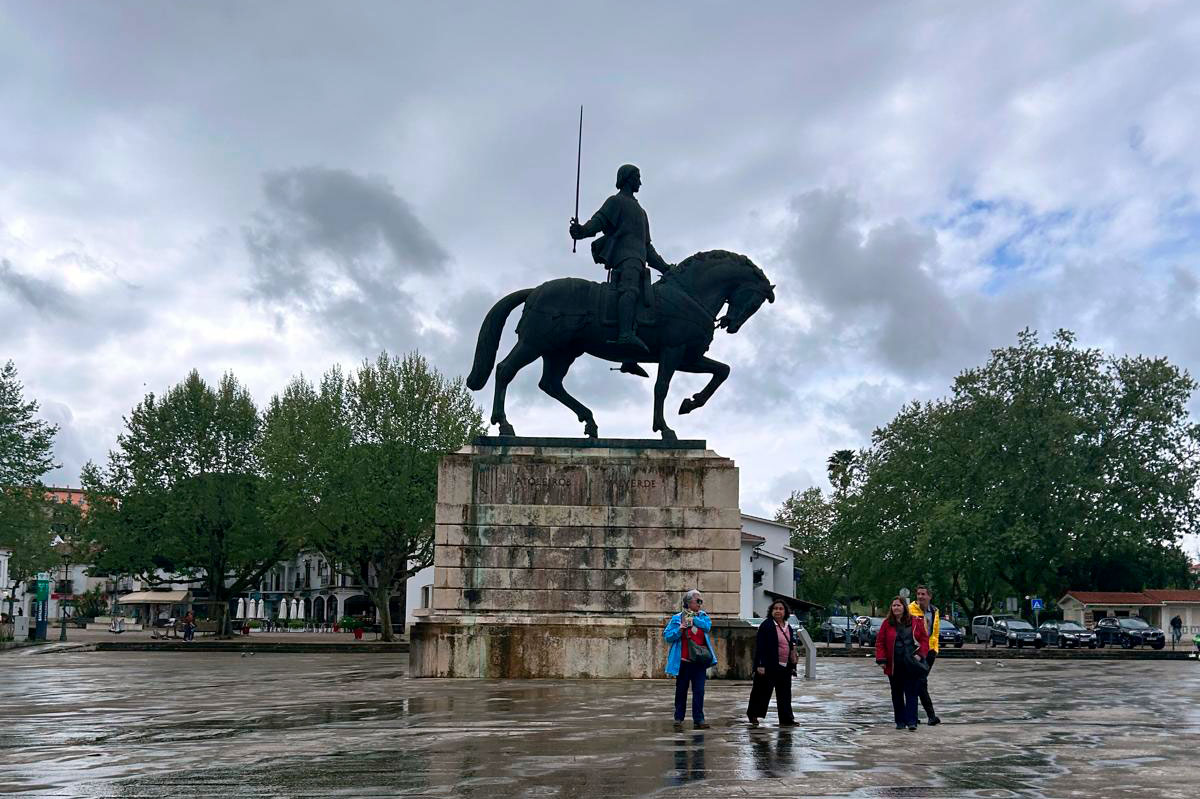
The story of the monastery begins in 1385, in the aftermath of the Battle of Aljubarrota. King João I of Portugal vowed to build a grand monastery dedicated to the Virgin Mary if his troops secured victory against Castile — a decisive moment that ensured Portugal’s independence.
Construction began in 1386 and would span over 150 years, involving multiple generations of architects, artists, and craftsmen. This extended timeline explains the monastery’s fascinating blend of architectural styles, evolving from Gothic to Manueline influences.
From its very foundation, the monastery was designed not only as a place of worship but also as a royal pantheon and a political statement — a physical manifestation of Portugal’s newfound strength.
Gothic Foundations of Batalha Monastery: Precision, Height, and Light
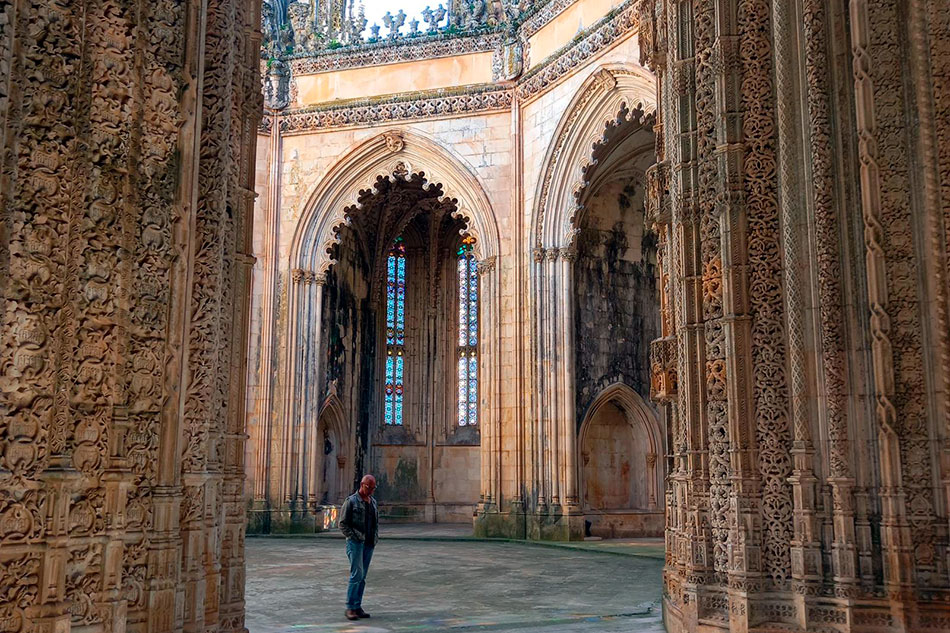
The initial phase of the Batalha monastery was led by architect Afonso Domingues, who established the structure’s Gothic framework. Inspired by European cathedrals, the design emphasized verticality, symmetry, and the interplay of light.
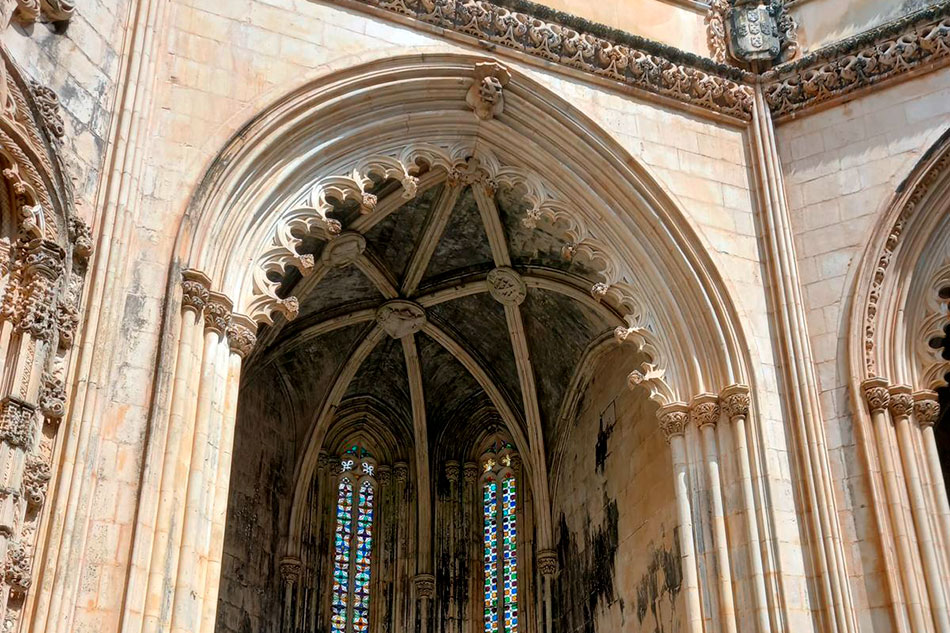
The monastery’s church is a prime example of Gothic architecture in Portugal. Its high vaulted ceilings, pointed arches, and large stained-glass windows create a sense of elevation and spiritual transcendence.
What distinguishes the Batalha monastery from other Gothic monuments is its refined execution. The stonework is precise, almost delicate, revealing a mastery of technique that was rare in the Iberian Peninsula at the time.
The Cloisters of Batalha Monastery: Harmony and Geometric Perfection
One of the most captivating elements of the monastery is its Royal Cloister (Claustro Real), completed under the direction of architect Huguet.
The cloister is a masterpiece of geometric harmony. Its arches are adorned with intricate tracery, blending Gothic and early Manueline elements. The open courtyard, surrounded by elegant arcades, creates a serene atmosphere that contrasts with the monument’s imposing exterior.
Light plays a central role here, making every visit to the monastery a unique visual experience depending on the time of day.
Manueline Influence in Batalha Monastery: Ornamentation and Maritime Identity
By the late 15th and early 16th centuries, the architectural language of Portugal was shifting. The Age of Discoveries brought wealth and new artistic influences.
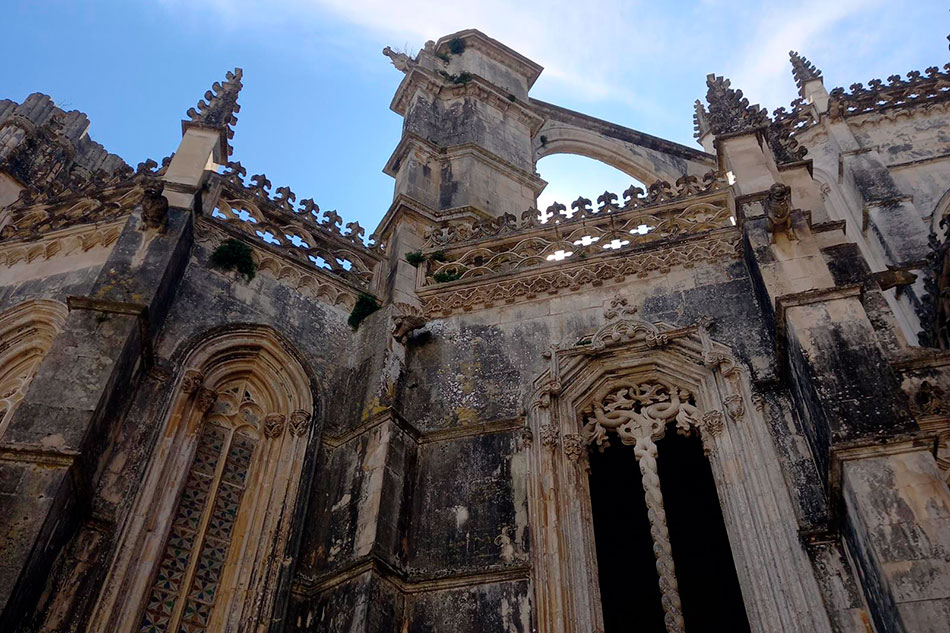
This transformation is evident in the Batalha monastery, particularly in the Unfinished Chapels (Capelas Imperfeitas). Here, the Manueline style takes center stage, with elaborate carvings of ropes, spheres, botanical motifs, and maritime symbols.
These elements reflect Portugal’s seafaring achievements and add a unique national identity to the UNESCO heritage monument, setting it apart from other European monuments.
Batalha Monastery as a Royal Pantheon
The Batalha monastery also serves as a royal pantheon, housing the tombs of King João I, Queen Philippa of Lancaster, and Prince Henry the Navigator.
The Founder’s Chapel is a highlight, combining architectural innovation with symbolic design. The detailed tomb sculptures reinforce the monastery’s role as a space of memory and national heritage.
Preservation and Restoration of Batalha Monastery
Over the centuries, the Batalha monastery has faced challenges, including damage from the 1755 Lisbon earthquake and periods of neglect.
Restoration efforts began in the 19th century and continue to this day, ensuring that the Batalha monastery remains one of Portugal’s best-preserved historical landmarks.
Its classification as a UNESCO World Heritage Site highlights its global significance and architectural value.
Visiting a UNESCO Heritage Monument Today
Today, the monument is one of the most visited attractions in Portugal’s Silver Coast region. Its combination of history, architecture, and cultural significance makes it a must-see destination.
Walking through its chapels, cloisters, and grand halls offers a journey through centuries of Portuguese history.
Why Should Be on Your Travel List
The monastery is not just an architectural landmark — it is a storytelling masterpiece. Each stone, arch, and carving reflects a different chapter of Portugal’s history.
For travelers exploring the Silver Coast, visiting the Gothic pearl is an essential experience that combines culture, history, and visual beauty.